Evil Lands: Epic MMORPG online
- 4.5
- Rating
- 10.00M
- Installs
- Free
- Price

 Analysis by App-foxy
I spent time with Evil Lands: Epic MMORPG online as a mobile role-playing game, paying particular attention to how comfortably it works in different situations and for different players. It presents a dark-fantasy world built around exploration, magic, quests, multiplayer activity, and player-versus-player action. That combination gives it more depth than a quick battle game, but it also means the experience can become demanding when the screen is busy or the connection is unstable.
The game is free to download, and its Teen content rating is worth taking seriously. It is aimed at players who enjoy fantasy combat and online progression rather than short, completely self-contained sessions. Rage Quit Games Group has continued the project through version 4.2.2, and the game has reached over ten million installs with an average rating of 4.5 from around 498 thousand ratings. Those figures suggest a well-established audience, although popularity does not remove the practical issues that come with a real-time MMO on a phone.
How readable and manageable is the world?
I find readability in Evil Lands depends less on memorizing every menu than on deciding what deserves attention in the moment. In this section, I look at how scene complexity, text, and a repeatable navigation routine affect that decision, before turning to the physical and sensory demands of play.
You May Also Like

 Blood Strike: 2.5 Anniversary
Blood Strike’s Loadouts Turn Every Drop Into a Tactical Gamble
A close look at Blood Strike’s custom loadouts: how fast access to signature weapons reshapes its battle royale rhythm, rewards preparation, and narrows the gap between fights.

 Pandora - Music & Podcasts
Pandora’s Music Is Easy to Start, but Harder to Recover
Pandora’s strength is its low-effort path from a seed to a station. Its weak spot is how much confidence it asks you to place in connection, setup, and quiet recovery.

 8 Ball Pool
 Is Built on Rivalries, Rematches, and Routine
A close look at the rivalries, rematches, shared routines, and unanswered safety questions that turn a quick pool match into a persistent mobile community.

 Samsung Music
’s Quiet Strength Is Playing What You Already Own
Its reach comes less from spectacle than from dependable access to a personal library. That simplicity is both the app’s strongest retention engine and its ceiling.

 AccuWeather: Weather Radar
AccuWeather Review: A Quick, Clear Forecast for Everyday Decisions
For everyday plans, the best forecast is the one you can understand quickly. AccuWeather makes rain timing, radar, and local conditions easy to act on, with a few trade-offs.

 Hill Climb Racing
Why Hill Climb Racing Still Turns Crashes Into One More Run
A tiny car, a bumpy hill and one more upgrade: Hill Climb Racing keeps resurfacing because its simple chaos makes every near-miss feel personal.
More From Our News Desk
View All News


Learning the interface without feeling lost
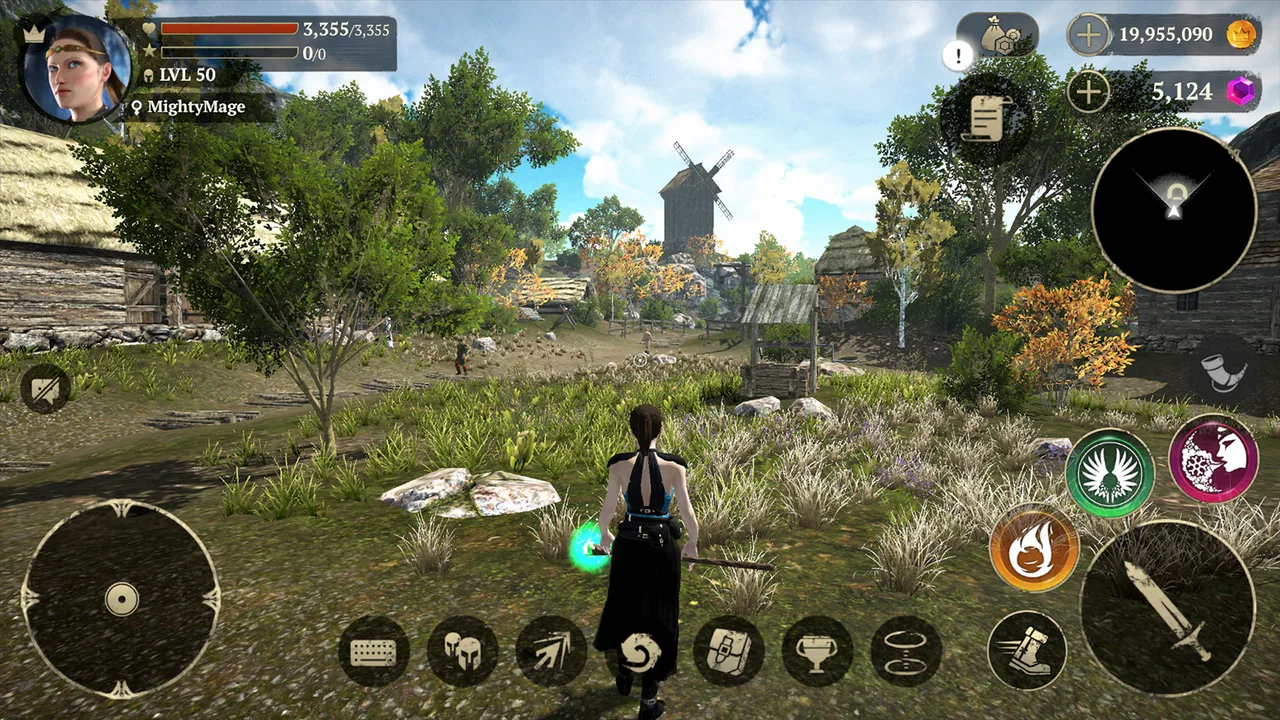
My first impression was that the game asks me to absorb several layers at once: movement, combat, quests, character development, equipment, and the wider online world. That is normal for an MMO RPG, but it can feel dense if I am used to simpler mobile role-playing games. The dark-fantasy presentation makes the setting attractive, yet darker scenery and combat effects can compete with small interface elements when a lot is happening.
I found it easier to understand the game when I treated the opening period as orientation rather than rushing toward the strongest possible character. Reading quest instructions, checking what each control does, and pausing between encounters helped me build a reliable routine. Players who tap quickly through every prompt may reach the action sooner, but they are also more likely to miss the logic behind progression and then feel that the menus are harder than they need to be.
The most useful habit is to separate navigation from fighting. When I am moving through the world, I can concentrate on where the quest is taking me. During combat, I focus on positioning and ability timing instead of trying to reorganize equipment. That sounds obvious, but the difference matters on a phone, where a finger can cover part of the screen and a crowded interface leaves less room for correction.
The game is more approachable when I use short, deliberate sessions instead of treating every visit as a full MMO marathon. A few minutes spent checking objectives before entering a fight makes the experience less confusing, especially for anyone who needs extra time to read or process visual information.
Text, contrast, and visual load
Readability depends heavily on the scene. Quiet exploration is easier to follow than a crowded battle involving effects, enemies, and other players. The dark fantasy style contributes atmosphere, but it may not suit someone who struggles with low-contrast visuals or rapidly changing backgrounds. I would recommend trying the game on the actual phone you plan to use rather than assuming that a large tablet-like display will feel the same on a compact handset.
There is also a practical difference between reading a quest and reacting to combat. Quest information rewards patience, while fighting favors quick recognition. If small text or layered icons are difficult for you, the game may still be playable, but you may need to slow down, increase the device’s general text size where possible, or use a larger screen. Those adjustments can help with menus, though they cannot change every element inside the game.
I would not choose this as my first recommendation for someone looking for a calm, high-contrast role-playing experience. Its appeal comes partly from visual atmosphere and active encounters, so players who need extremely simple presentation may find a turn-based RPG or a text-focused adventure more comfortable.
Navigation as a personal routine
One non-obvious strength is that the game rewards creating a repeatable workflow. I like to begin by identifying the immediate quest, checking my character’s condition, and deciding whether I want exploration, combat, or social play. This reduces the number of decisions I make while moving through a dangerous area. It is especially helpful for players who become tired when they must switch constantly between reading, aiming, fighting, and menu management.
Another useful approach is to avoid judging the whole game by the first busy session. The learning curve feels less severe once the basic control pattern becomes familiar. I still think the volume of systems can be a barrier, but the barrier is more about information density than a lack of purpose. There is usually a reason to inspect the next quest or improve the character; the challenge is keeping track of those reasons.
Motor and sensory considerations during play
I judge the control experience by more than whether a battle feels responsive: comfort, fatigue, and the amount of visual activity all shape how long I want to keep playing. Next, I consider those motor and sensory demands, including why a setup that works for relaxed exploration may feel different in a tense encounter.
Touch controls and reaction time
Real-time combat places clear demands on touch accuracy and timing. I need to move, choose attacks, react to threats, and keep track of the surrounding space without accidentally covering important parts of the display. Players with limited dexterity, tremors, joint pain, or slower reaction time may find this more tiring than a turn-based game, because the encounter does not always wait for a comfortable input.
A practical way to reduce strain is to use the largest screen that remains comfortable to hold and to avoid playing during situations where the phone is moving. I also prefer supporting the device rather than gripping it tightly for a long session. That does not change the controls, but it can make repeated movement and combat less uncomfortable.
The game’s online role-playing design creates a trade-off here. Active combat feels more immediate than selecting commands from a menu, and that immediacy is part of the fun. At the same time, it leaves less room for players who need longer pauses between decisions. If your priority is strategic planning without pressure, a turn-based mobile RPG will probably be a better match.
Sound, effects, and sensory fatigue
Magic, battles, and a dark fantasy world can produce a lot of sensory information. I found that the visual side is more important than sound for understanding what is happening, but sound can still contribute to the feeling of an active world. Players who are sensitive to flashing effects, rapid movement, or layered animation should test the game cautiously and take breaks before fatigue turns into frustration.
Playing with sound lowered or muted can make the game easier to fit into everyday life, such as a quiet room or a commute. The compromise is that I may lose some immediate audio feedback and need to watch the screen more carefully. For me, silent play works best when I am exploring or completing familiar tasks; during difficult combat, the extra visual attention can become tiring.
There is no single ideal setup. Someone with hearing loss may find that the visual action is enough, while someone who relies on audio cues may want to test whether the game communicates the information they need clearly without depending on sound. I would make that decision during a low-pressure session rather than in the middle of a competitive encounter.
When online play changes the experience
Because this is a multiplayer open-world MMO RPG, access is also affected by the situation around me. A stable connection and a quiet enough environment make real-time play much easier. On a crowded train, in a noisy waiting room, or while switching between tasks, I may have trouble giving the game the attention it expects. A missed input can matter more in PvP than it does during ordinary exploration.
This is where the game differs from many offline role-playing alternatives. An offline title can be paused whenever I need to rest my hands, reread instructions, or respond to someone nearby. Evil Lands is better suited to players who can protect a small block of uninterrupted attention, even if that block is not very long.
Situational access in everyday use
For me, accessibility also changes with the setting: a quiet break can suit a focused quest, while a moving commute or constant interruptions can make real-time play harder to manage. I use everyday situations to show when the game fits and when another format may be more practical, then weigh the barriers that remain.
A realistic short-session scenario
Imagine that I have fifteen quiet minutes after work. I can open the game, review the current objective, complete a familiar quest step, and stop before beginning a demanding multiplayer fight. That is a sensible use of the game because it keeps the session focused and avoids leaving a complicated encounter unfinished. The same approach works for a player who needs frequent breaks or who cannot comfortably hold a phone for an extended period.
Now imagine playing while walking, cooking, or caring for a child. I would not recommend it. The game’s active combat and online setting make divided attention a poor fit. A pause-friendly puzzle or turn-based RPG would be safer and less frustrating. This is not a criticism of the game’s ambition; it is simply a mismatch between its design and a distracted environment.
For a player who prefers social fantasy games, the online world can provide a reason to return beyond a single quest. For someone who wants complete control over pace, the same structure may feel restrictive. The important question is not whether the game is accessible in the abstract, but whether its demands fit the player’s available attention, movement, vision, hearing, and connection at the time of play.
Choosing between exploration, PvP, and quests
The different activities do not place equal demands on the player. Exploration and ordinary questing give me more freedom to look around and recover from mistakes. PvP is less forgiving because another player can take advantage of hesitation. I would begin with exploration and quests, learn the controls, and only then decide whether competitive play feels physically and mentally comfortable.
This staged approach is also useful for players who are sensitive to pressure. It lets me discover whether the visual effects, touch layout, and pace are manageable before adding the extra stress of competition. Someone who enjoys the world but dislikes PvP can still find value in the role-playing and questing side, while a player seeking only competitive battles may prefer a game designed around shorter, more focused matches.
Cost and commitment
The free entry point makes it easy to test the experience without paying before I know whether the controls suit me. However, the game includes optional purchases ranging from $0.99 to $99.99 per item. That is an important consideration for families and for anyone who prefers a completely predictable gaming budget. I would decide on a spending limit before playing, rather than making payment decisions while chasing progress or reacting to a difficult encounter.
The presence of purchases does not automatically make the game unsuitable, but it changes the way I evaluate it. A player who wants a one-time purchase with no ongoing temptation may be happier with a premium RPG. A player who is comfortable sampling a free online world and ignoring optional spending can approach it more casually.
Remaining barriers and who should choose something else
A game can be enjoyable and still be the wrong fit for someone’s hands, attention, vision, or preference for offline play. I close by identifying the situations where I would choose a slower or more pause-friendly alternative, so readers can compare the demands with their own needs before committing time or spending.
Where the design can become demanding
The main barrier is the combination of real-time action, a visually active fantasy setting, and MMO-style information. Each element is manageable by itself, but together they can overload players who need slower pacing or very clear separation between tasks. I sometimes find that the challenge is not defeating an enemy; it is keeping my attention on the right part of the screen while several things compete for it.
Another barrier is the online nature of the experience. A connection problem, interruption, or noisy environment can affect play in ways that an offline RPG would avoid. This makes the game less dependable for travel, limited connectivity, or situations where I may need to stop without warning. I would keep an offline alternative installed for those moments.
Progression can also encourage longer-term engagement, which is enjoyable for dedicated players but potentially tiring for people who want a compact story with a clear ending. The game is a better fit for someone who likes returning to a character and world than for someone who wants to finish a complete adventure over a weekend.
Who will get the most from it?
I would recommend it to players who enjoy dark fantasy, active touch combat, open-world MMO structure, and the possibility of meeting other players. It is particularly appealing if you like deciding how to spend a session: follow a quest, explore, improve your character, or test yourself against others. The role-playing category is represented here through ongoing character development rather than a purely linear story.
I would be more cautious about recommending it to players with significant difficulty using fast touch controls, strong sensitivity to visual motion, limited access to a stable connection, or a strict preference for offline play. It may also disappoint anyone expecting a simple, relaxed game that can be played with one hand while attention is elsewhere.
For families, the Teen rating and optional purchases deserve a conversation before installation. The game’s fantasy violence and online context are not details I would ignore when deciding whether it is appropriate for a younger player. I would also explain that free installation does not mean every item or convenience inside the game is free.
My inclusive verdict after playing
Evil Lands: Epic MMORPG online succeeds when I give it the conditions it needs: a comfortable screen, steady attention, a reliable connection, and enough patience to learn its layered interface. Its strongest quality is the sense that I am entering a continuing fantasy world rather than completing a sequence of disconnected mobile battles. Quests, magic, exploration, and PvP give the game several ways to stay interesting.
Its weakest side is equally clear. The same real-time, online structure that makes combat lively can make the game tiring or inaccessible in noisy, rushed, visually demanding, or physically uncomfortable situations. I would not describe it as an effortless game for every player, and I would not choose it over a turn-based or offline RPG when pause control is my priority.
Still, I think the free entry point makes testing worthwhile for the right audience. Start with a short exploration session, keep spending optional, and pay attention to how your hands and eyes feel rather than judging only by excitement. If the controls and visual pace settle into a comfortable rhythm, this can be a rewarding dark-fantasy MMO RPG. If they do not, choosing a slower game is not missing the point; it is choosing a format that respects the way you actually play.
FAQs for Evil Lands: Epic MMORPG online
01What is Evil Lands: Epic MMORPG Online about?
Evil Lands is a fantasy-themed MMORPG where players embark on quests, battle monsters, and explore vast landscapes. The game offers real-time multiplayer gameplay, allowing you to team up with friends or other players globally to take on challenging missions. Players can choose from various character classes and customize their skills and gear.
02How are the graphics and controls in Evil Lands?
Evil Lands boasts impressive 3D graphics that enhance the immersive fantasy environment. The visuals are detailed, with lush landscapes and intricate character designs. The controls are intuitive and user-friendly, making it easy for both new and experienced players to navigate the world and engage in combat effectively.
03Is Evil Lands free to play?
Evil Lands is free to download and play, but it offers in-app purchases. These purchases are optional and can enhance your gaming experience by providing access to exclusive items, character upgrades, and other perks. However, the game is designed to be enjoyable without spending money, as players can earn rewards through gameplay.
04What are the system requirements for Evil Lands?
Evil Lands requires a device with a stable internet connection due to its online multiplayer functionality. It is compatible with most modern Android and iOS devices, but older models may experience performance issues. Ensure your device meets the minimum operating system requirements and has sufficient storage space for optimal gameplay.
05Can I play Evil Lands with friends?
Yes, Evil Lands encourages cooperative gameplay. You can team up with friends by forming parties to tackle quests and challenges together. The game features a real-time multiplayer mode where collaboration is key to overcoming powerful enemies and completing missions, enhancing the overall social aspect of the game.
Pros
- Stunning graphics enhance immersive gameplay.
- Real-time multiplayer with diverse missions.
- Intuitive controls for easy navigation.
- Variety of characters with unique abilities.
- Frequent updates keep content fresh.
Cons
- Needs stable internet for optimal experience.
- In-app purchases can be costly.
- Occasional lag in crowded areas.
- Limited customization options.
- Battery consumption is quite high.

Evil Lands: Epic MMORPG online
Gallery